Category: Uncategorized

  • The Dance Happens During the Transitions

    On a rainy day in May, three weeks before our end-of-year recital, I was watching my advanced students rehearse their piece. There were a few challenging elements we had been working on for several months. A younger teacher on my staff had diligently learned and developed conditioning exercises to help them achieve these skills, and almost every one of the dancers had successfully executed them at one time or another.

    But the connection between the movements just wasn’t there. They looked like they were running from one element to the next.

    So I stopped the music.

    “Listen, I can teach a monkey how to do tricks. I understand why you love learning and achieving the tricks. I do. I get it. But the dancing doesn’t happen during the tricks. The dance happens during the transitions. That’s what connects the elements. That’s what breathes life into it. THAT IS WHAT MAKES IT DANCING!”

    I have thought of that rainy day, and countless similar ones, many times since I left the studio. For the better part of three years, I worked full-time and went to school full-time. I was constantly finding myself in new situations, meeting new people, and being trained and taught by people younger than I – some half my age.

    I felt energized, engaged, inspired, and ready to take on whatever came my way. I was also exhausted, nervous, humbled, and missing time with my friends and family. I felt younger and spry, as if I were back in college or at a dance intensive.

    Even after 24 years as a teacher and owner, I hadn’t forgotten what it felt like to be a student. I had spent countless hours in studios adapting to different teachers—the kind and calm ones and the ones who yelled colorful, occasionally degrading things across the room. I learned to take what they had to teach me and perform as well as I could.

    But the last time I had been a full-time student was more than 30 years ago.

    Unbeknownst to me, I look older than I did in the early ’90s. I guess the head full of silver hair and my willingness to sit in the front row, nodding and listening intently to every teacher, gave something away.

    I also showed up on time and dressed for class. Usually a little dolled up. I was genuinely confused by classmates who wandered in late looking as though they had just rolled out of bed. I was even more baffled when someone called in sick because they’d been out too late the night before.

    What are they doing?

    And then I remembered.

    Oh. They’re college kids.

    In truth, many of my classmates weren’t traditional college students at all. They were balancing school with young children, spouses, jobs, and family responsibilities. Most of the time, I was in awe of them. They were funny and self-deprecating one minute, astute and badass the next. I envied the long careers ahead of them and also felt protective of them. I wanted them to make it.

    I loved nursing school.

    I didn’t love having time for almost nothing but work and studying, but I loved being there. Age brings an awareness of how temporary the stages of life are. I knew that if I stayed the course, eventually this one would be behind me.

    Getting to be a beginner again—and immersing myself in something I had wanted to do since I wrote my vocational notebook freshman year of high school—was energizing. It was like opening a trap door that led into infinity.

    I quickly realized that no matter how hard I tried, I would never catch up to nurses my age who had spent their entire careers in the profession. I would never know it all. Every skill I mastered would reveal something else I didn’t know yet. Rather than feeling discouraged, I felt inspired. There would always be more to learn, another skill to develop, another direction I could take.

    I would never be bored.

    I was thrilled to graduate. It took about four weeks to take my boards and another three to receive my license. Luckily, there were openings for nurses on the unit where I had worked as a CNA during school, so seven weeks after graduating, I started my first job as an RN.

    Almost immediately, people started commenting on my navy scrubs—the color nurses wear at my hospital. I was surprised by how many coworkers congratulated me or simply told me how much they liked seeing me in navy.

    Apparently, I looked like a nurse.

    My preceptors were patient, respectful, thorough, and kind. We laughed a lot. I was also frustrated at times, mostly by the enormous gap between becoming licensed to practice nursing and actually knowing how to be a nurse.

    It still amazes me. You graduate from nursing school. You pass the NCLEX. The state issues you a license.

    And then you are a registered nurse.

    I had never experienced an identity quite like that.

    As a dancer, I was reluctant to call myself a dancer for years. I wasn’t sure I had earned the title yet. I’m still not sure what I thought would qualify me. Was it a certain number of years spent training? A certain level of proficiency? Being paid to perform? I don’t know. Oddly enough, I don’t think I became completely comfortable claiming it until after I had left that part of my life behind.

    Then I could say easily, I was a dancer. I was a dance teacher.

    Now here I was saying, I’m a nurse.

    The responsibility felt different. I had always taken teaching seriously. Dance teachers can have an enormous influence on their students, for better or worse, and I understood that what I said and how I taught could stay with a young person long after she left my studio. I wanted my students to discover what they were made of and what they were capable of. I reminded them often that who they were when no one was watching might matter more than anything they could accomplish onstage.

    Nursing carried another kind of responsibility. Now the person depending on me might be sick, frightened, unstable, or trusting me to notice something important. Thinking too hard about that could be overwhelming.

    And yet, I was enormously proud to be a nurse. I felt as though I had been admitted into this remarkable group of brilliant, quirky, observant advocates.

    And, dare I say it, badasses.

    At first, I felt as if everyone around me—including the patients—knew more than I did. I was task-oriented and painfully aware of my lack of fluidity with many of the hard skills. I didn’t speak up much, and I rarely asked patients if they had questions.

    Whenever I could, I rounded with the doctors. I listened to them explain things to patients and families, partly so I could learn to recognize clinical patterns and partly so I could understand what I might need to explain again later.

    One day, I was rounding with a physician who had known his patient for years. He was explaining something to her, and I could tell she wasn’t understanding him. I don’t remember what the issue was or what he was recommending. What I do remember is the uncomfortable internal debate about whether I should say something.

    I stood there listening for a couple of minutes.

    Finally, I interrupted.

    I explained the same concept in a different way, one I thought might make more sense to her. And suddenly, it did. She understood what the doctor was recommending and agreed to it.

    It was a small moment, but something shifted for me.

    A patient may be living in her own body, with her own disease and her own circumstances, but that doesn’t mean she understands what is happening to her or has all the information she needs to make a decision. Providers don’t always have enough time to address every question or concern. And often, patients haven’t had enough time to absorb what they’ve just heard to even know what questions they want to ask.

    But I knew something about that.

    I had spent decades watching people learn. I knew how to recognize when someone wasn’t understanding what was being presented, and I knew how to approach the same idea from another direction. I had done it countless times with dancers whose bodies and brains processed information differently.

    I hadn’t stopped being a dance teacher when I became a nurse.

    I had simply brought the teacher with me into a different room.

    Nursing school had taught me how much of nursing involves teaching. But as a brand-new nurse, I had been so consumed with completing tasks and performing hard skills that I had temporarily lost my voice.

    I found it again that day.

    My patient understood.

    And the doctor wasn’t one bit irritated that the brand-new nurse had interrupted him. That helped too.

    There is a lot I don’t know each time I arrive at work. I don’t know which patients I’ll care for. I don’t know how the patients from my previous shifts are doing that day, and I usually don’t know which of my teammates will be working.

    I don’t know how the trajectory of my nursing career will unfold, and I have no idea what opportunities lie ahead of me.

    But I do know this: learning something new, no matter the subject, has a familiar rhythm. It is always a transition. It involves risk and discomfort, but it also involves joy, timing, and a little luck.

    Like a dance that never really ends, the best part is in the thick of the mess—getting from one element, one trick, to the next.

    That’s what makes a dancer the one we can’t take our eyes off of. It isn’t just the tricks she can execute. It’s the way she moves between them—with purpose, intention, and joy. She listens to the music. She adapts to what’s happening around her. And when something doesn’t go quite as planned, she keeps dancing.
  • Happy Birthday, Joe

    Happy Birthday, Joe

    Originally written in 2019, when Joe would have turned 50 and 30 years had passed since his death.

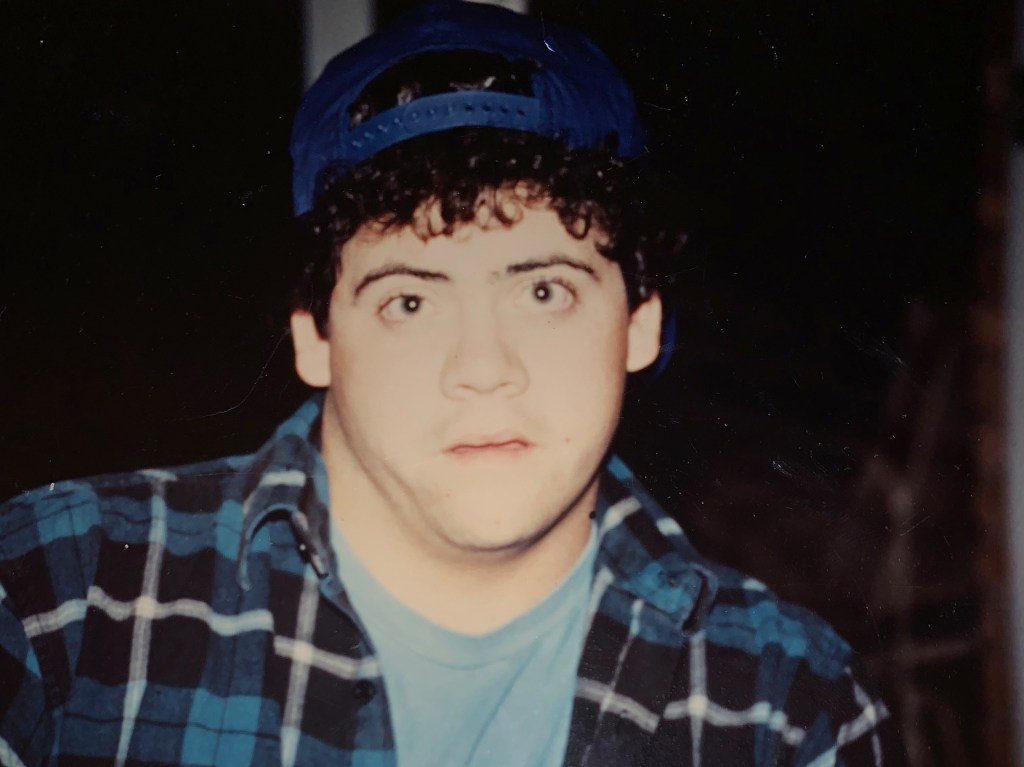
    My brother Joe would have turned 50 today. Last month marked the 30th anniversary of his death. He was only 19, a month shy of 20, when he died. He has been gone 10 years longer than he lived, and I have lived almost twice as long without him as I did with him. Today, I am 28 years older than he was when he died. That is impossible for me to reconcile. No matter how old I get, in my heart and mind he is still my big brother.


    img_4875

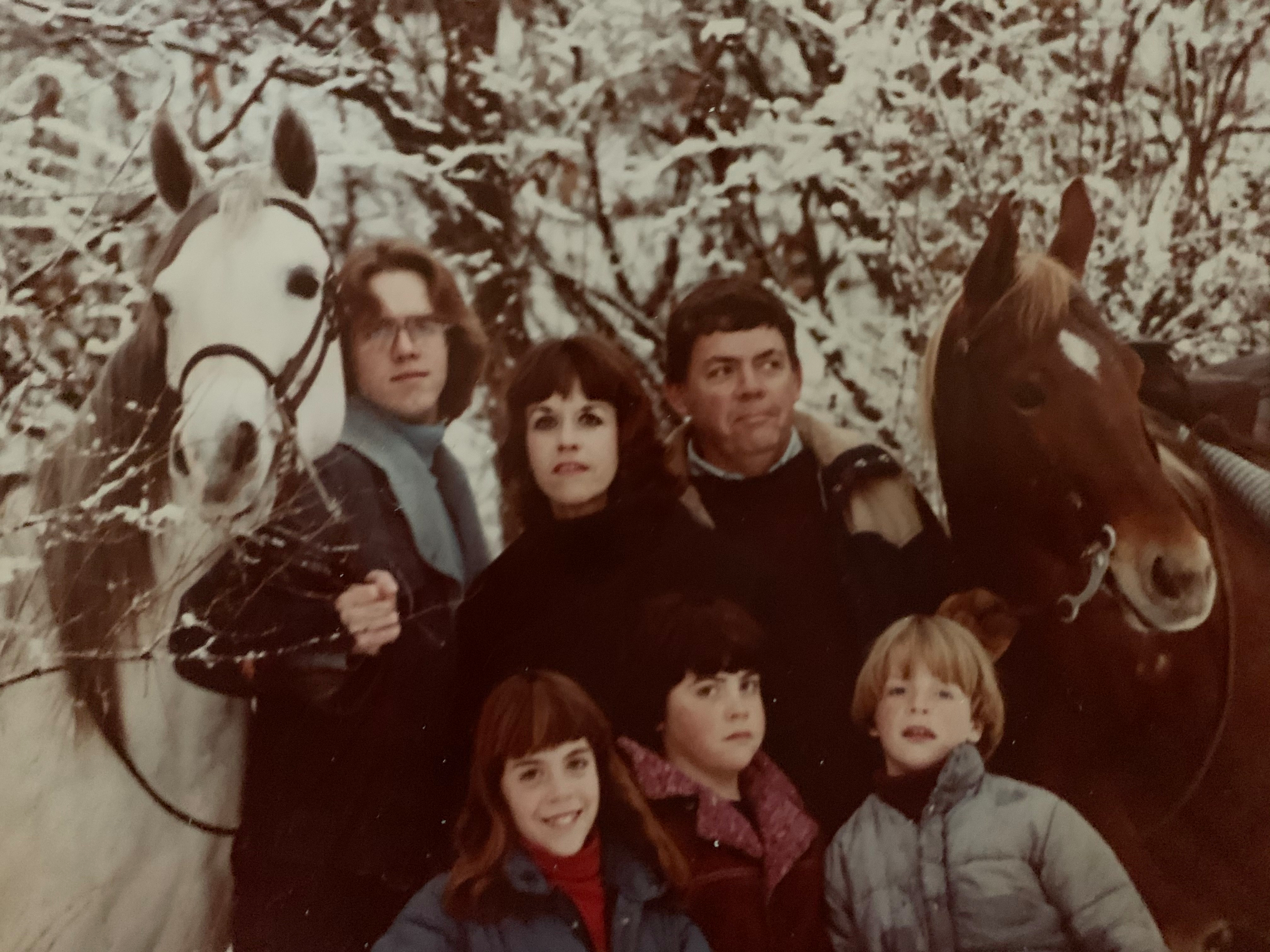
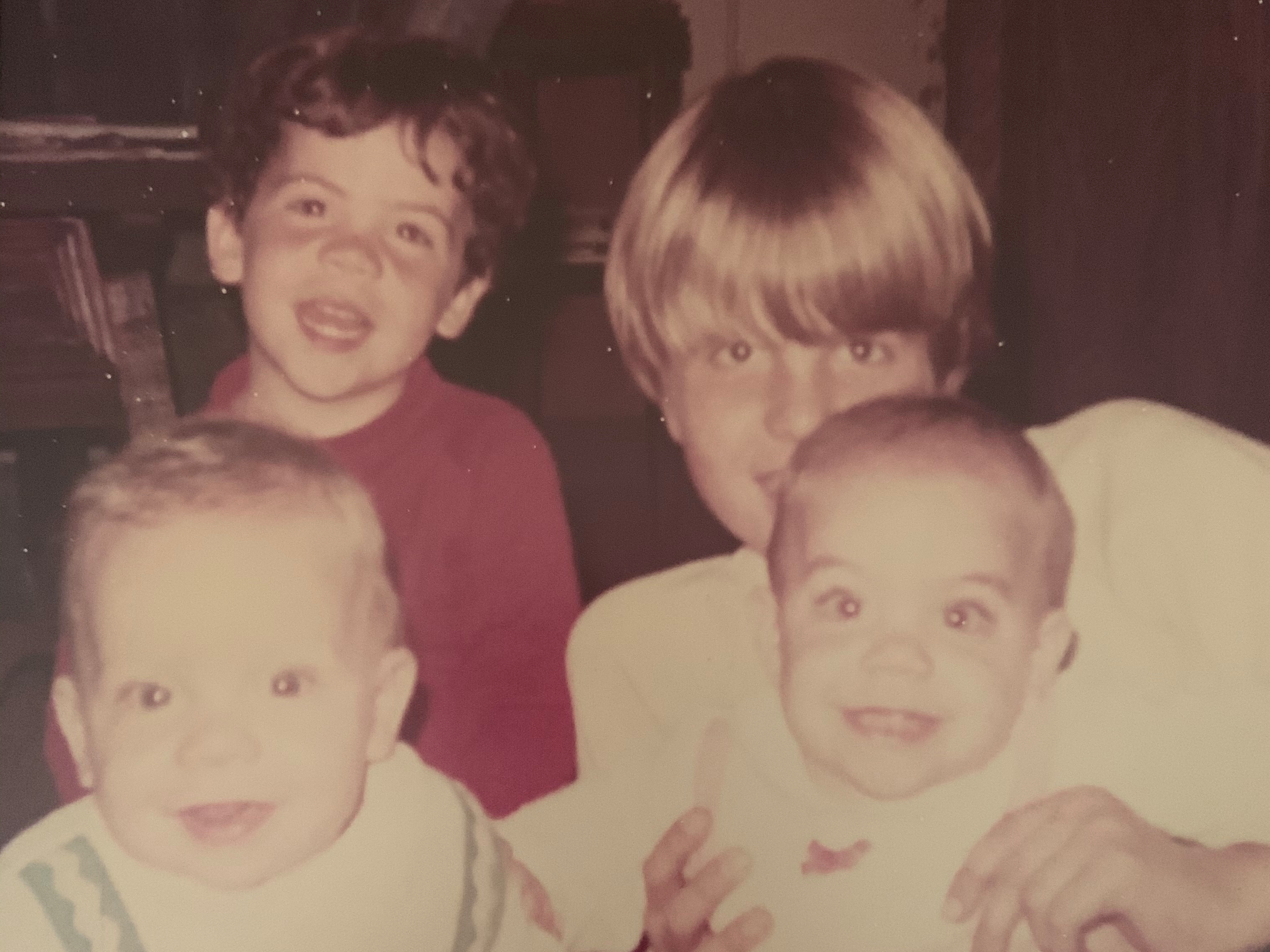
    Our siblings are part of our identity. Growing up, they witness our lives; we know them, and they know us, better than anyone else. My twin brother Grady and I are the youngest in our family. We were born into a world with two older brothers, Cliff and Joe. Our bonds began by circumstance and became part of who we are. We depended on one another for teasing, support, fun, arguments, generosity, selfishness, secrets, betrayals, physical fights, and protection—and for joining forces, sometimes for and sometimes against our parents.

    These dynamics confused my parents, who were both only children. They simply couldn’t understand how you could threaten someone with a butcher knife one minute and go outside together to play catch the next. Luckily for us, we loved and liked each other in equal measure.

    When Joey died, the loss left us unsettled as we struggled to find our places in the changed family. Only now, 30 years later, have I come to understand that we didn’t—or couldn’t—reposition ourselves at all. We spent decades trying to adapt to the holes in our family’s nucleus: the first when Joe died, and another nine years later when my dad died.


    img_4877


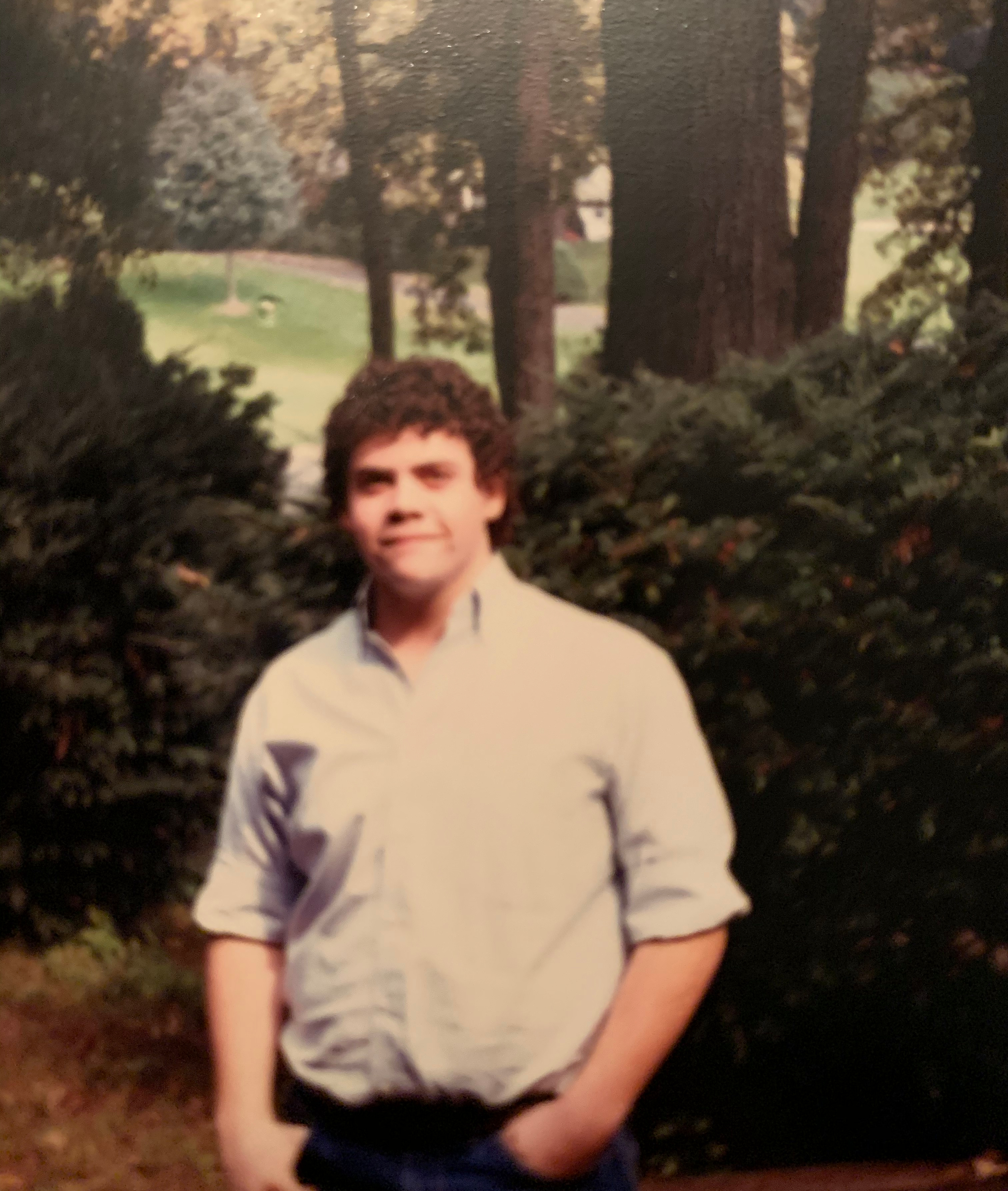
    I can vividly picture Joe walking into a room, jiggling his car keys, the front pockets of his jeans turned slightly out, his Oxford shirt mostly untucked, dark curly hair like a halo around his head, green eyes twinkling, and a huge smile on his face. Joe had an instinct for humor that was impossible to teach. His comedic timing was incredible—he just got it. He was usually laughing about something, his energy kinetic and warm. If he wasn’t entering a room talking or laughing, he was humming and drumming along to Bob Seger, Clapton, Springsteen, or another classic rock artist who met his approval.

    A great music enthusiast, he read The Rolling Stone Record Guide cover to cover multiple times. A guide intended as reference material was a feast for a trivia buff and voracious reader like him.

    Joe was my mentor in many things, but especially music. “Robin, there will be no B96 played in this house!” I desperately wanted him to think I was smart and cool, so I obediently listened to and learned to love classic rock. But first, we had a couple of disco parties at the neighbors’ house, where all three of my brothers stood in the street holding up Steve Dahl posters made by my brother Cliff and chanting, “Disco sucks! Disco sucks!”

    Joey had a way of teasing me and making me feel better at the same time. The summer between sixth and seventh grade, one of my closest friends and I ended up with the same bathing suit. She was much thinner than I was, which caused me some angst. Joe’s response was, “Oh, Robin, she will look like a little twig in it and you will look like a NICE. PORK. SAUSAGE!”

    Joe and I shared sturdy builds and a great fondness for food. Of course, a pork sausage appealed to him, but none of the girls photographed in their bathing suits in the pages of Seventeen magazine looked like pork sausages! Even so, I felt better.

    I definitely wasn’t as intellectually curious as Joe was. Few people were—other than everyone else in my family. I leaned more toward physical pursuits: dancing and working out, my appearance, my peers, and thumbing through fashion magazines. This troubled Joe. One summer, he spent a lot of his free time following me around and reading aloud from Time magazine. His frustration grew as I stalked around, rolling my eyes and sighing.

    Finally, he made me a deal. He said he would leave me alone if I could name the presidents of the United States backward, starting with Ronald Reagan. With a lot of coaching, we got back to Herbert Hoover.

    “Come on, Robin, he served more terms than any other president!”

    I replied, “Wasn’t he the one who was married to Marilyn Monroe?”

    Exasperated, Joe froze, looked over his glasses through the tops of his eyes, and said, “President DiMaggio, Robin? President DiMaggio!”

    We didn’t get any farther. I now understand that he was trying to get me to say FDR.


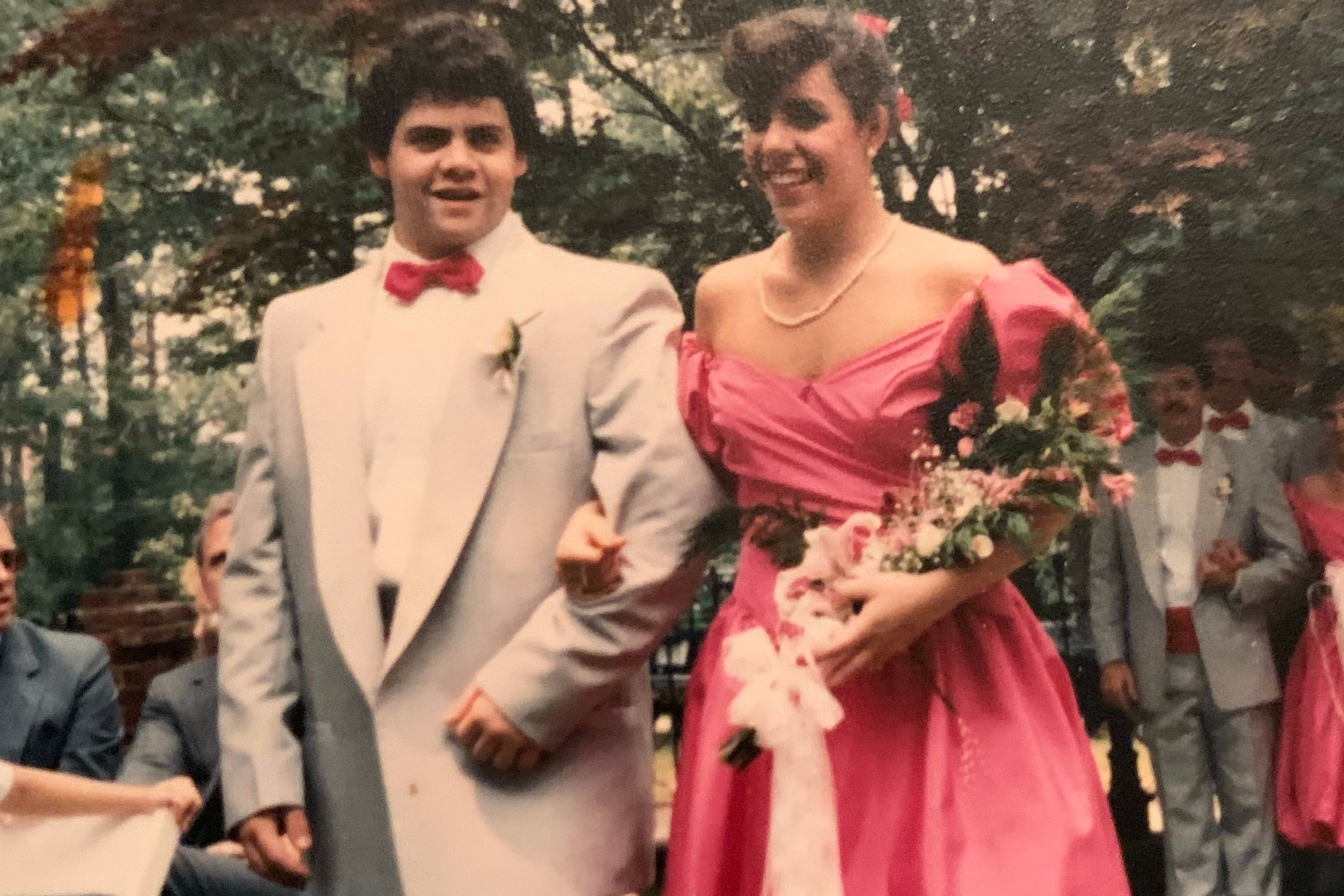
    We were two years and three months apart, and three school years apart; he was a senior in high school when I was a freshman. Only two inches taller than me, Joey would stand as tall as he could, puff out his chest, rear back, and proudly introduce me to people as his “little sister Robin.” It filled me with love, pride, and a sense of protection.

    Joey loved music as much as he loved books. When he turned 16, he drove our mom’s hand-me-down, two-door, V8, rear-wheel-drive Oldsmobile Delta ’88. He kept a boom box in the front seat, plugged into the cigarette lighter, and about 200 cassette tapes loose in the front and back seats. Every time he turned a corner, the tapes slid one way or the other, thrashing around—not that we could hear them; the music was too loud.

    Luckily for Grady and me, Joe drove us to school every day during our freshman year, so we didn’t have to take the bus. We did, however, have to ride in the back seat because Joe also drove two of his friends to school. Every morning, we climbed in, and Joe drove us to school talking, singing, playing air guitar, drumming, and fishtailing the whole way. We arrived nauseous, bruised, and slightly hard of hearing, but extremely grateful we hadn’t ridden the bus—and proud to walk into school with our senior brother. It was another example of the paradoxical ways our siblings look out for us.


    img_4885

    Joe read constantly from the time he was about two and knew more trivia than anyone. He loved sports, especially Major League Baseball, and was a fanatic about sports statistics. Instead of playing sports in high school, he competed on the Academic Bowl team, announced varsity girls’ basketball games, served as student council vice president, umpired Little League games, and wrote for the underground newspaper.

    Wise beyond his years, Joe had a revolutionary outlook on the establishment. He admired men and women who fought on behalf of the underground, the underrepresented, the underprivileged, and the underserved. He had a profound interest in current events, the human condition, and the environment. When he died, we set up a way for people to make donations to Greenpeace in his name.

    He could do uncanny impressions of Jesse Jackson and John Belushi, and he loved an audience. At the same time, he knew how to make people feel seen. His gregarious charm helped him connect with people easily. That connection has stayed with us. In the years since his death, I’ve received many notes and emails from people he connected with.


    I credit Joe with my love of classic rock, great books, and true friends. He instilled in me intellectual curiosity, enthusiasm for food, a revolutionary outlook, and the ability to laugh at myself. I’m glad I see glimpses of him in my nieces Mary, Molly, and Rory, and my nephew Mitchell.

    Whenever I hear a song by Bob Seger, Crosby, Stills & Nash, Bruce Springsteen, Eric Clapton, Neil Young, David Bowie, James Taylor, or John Lennon—or hear a John Belushi line—no matter where I am or what I’m doing, I can hear Joe belting it out. I can see him playing air guitar, turning cartwheels, or air-drumming away as if it were yesterday.

    Of course, I’ve tried to age him along with us. I just can’t seem to do it. I can’t make him older than he was when he died, and I can’t change the fact that I’ve grown older than my big brother ever got to be.

    It’s okay. As my brother Cliff says, I think I’ll keep him right where he was—because he was pretty cool.

    img_4886

  • I’m Thankful for…

    I’m Thankful for…

    For many Thanksgiving dinners while I was growing up, we passed a chalice of wine around the table and before taking a sip, had to say what we were thankful for. Of course we would respond with the usual “family, food, friends” ; but this year I would like to express my gratitude for something different.

    I’m thankful for dance, yoga and the ability to be physically active. It is therapy for me. The first week of my senior year in high school, my brother Joe died suddenly.  Each surviving member of my family, my dad, mom, two brothers and I were awakened just after midnight and told the shocking news. In hindsight, only now do I begin to understand how profoundly changed I was in that moment.

    One week later, I had a glimpse when one of my teachers handed back a homework assignment I had completed only hours before I found out Joe died. Staring at the assignment, I felt like I had the wind knocked out of me. I realized the person I was before Joey died was gone; nothing about me was the same but I couldn’t put my finger on how I had changed. For several years I struggled to concentrate on schoolwork, reading, and physically passive tasks. What this experience put in motion for me was a deep commitment to spending most of my time in my body. What I was able to do well was dance. From the momentum of a strong academic background, I made it through my senior year; but by the time I started college, a year later, studying seemed impossible.

    Heartbroken and in shock, the only time I felt good was while I was dancing. So, after a semester as a nursing major, I changed my major to dance. For several hours each day, my body felt strong and healthy. I could connect to myself without having to acknowledge how sad I was. Physically exhausted, I slept well and I received constant and appropriate attention from teachers in the form of constructive criticism during dance class which kept me present and mindful of what I was doing each moment.

    Consequently, when grief would wash over me like a massive wave that knocked me down and left me gasping for air, I could recover. Occasionally, waking up in the morning was the worst part of grieving. Upon waking, my mind would be consumed with a dream I had. In my dreams Joey was alive so there would be that moment of happiness quickly replaced with the dread of realizing, again, that he was gone. I was able to get out of bed because I had somewhere to go where, at least physically, I felt good.

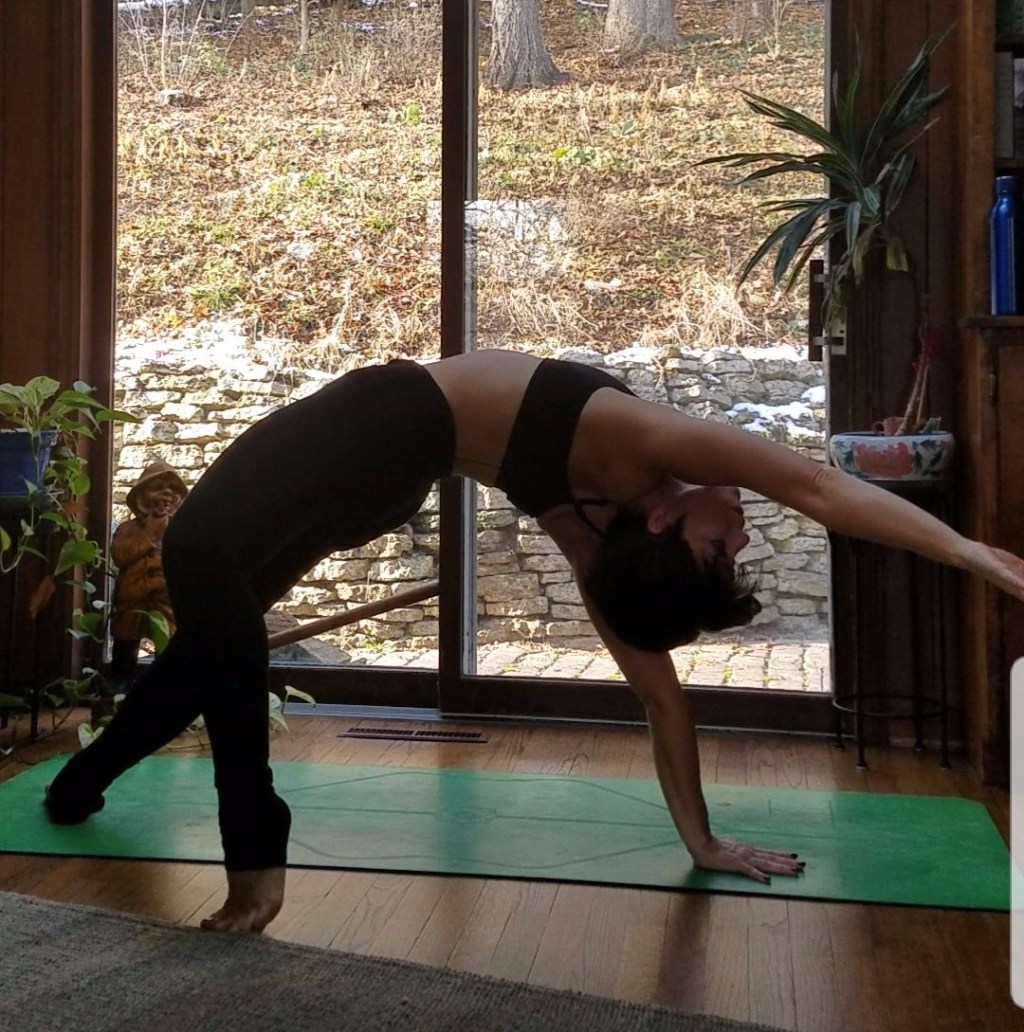
    At the time, I had no idea that what I was doing through physical exercise was rebalancing stress hormones and raising endorphins and that there are provable scientific reasons I felt better. I was just doing what helped me survive. For this, I am so thankful for my career teaching dance and yoga. Each class I am helping my students be present and heal their bodies, hearts, and minds while providing them with tools to be physically, emotionally, and spiritually healthy. Just like every aging dancer, I have reached a time when dancing the way I did as a 20 or 30 year old isn’t possible or even safe. As a result, I practice yoga. My practice helps me manage and care for old physical wounds, but it also isn’t lost on me that my favorite yoga poses are heart opening postures. The healing of my heart is what led me to it and I am forever grateful.

    Happy Thanksgiving,

    Robin

    P.S. Yoga is accesible to everyone!! See photos for some of my favorite heart opening postures!! Message me if you need help with your practice!