Tag: women

  • The Dance Happens During the Transitions

    On a rainy day in May, three weeks before our end-of-year recital, I was watching my advanced students rehearse their piece. There were a few challenging elements we had been working on for several months. A younger teacher on my staff had diligently learned and developed conditioning exercises to help them achieve these skills, and almost every one of the dancers had successfully executed them at one time or another.

    But the connection between the movements just wasn’t there. They looked like they were running from one element to the next.

    So I stopped the music.

    “Listen, I can teach a monkey how to do tricks. I understand why you love learning and achieving the tricks. I do. I get it. But the dancing doesn’t happen during the tricks. The dance happens during the transitions. That’s what connects the elements. That’s what breathes life into it. THAT IS WHAT MAKES IT DANCING!”

    I have thought of that rainy day, and countless similar ones, many times since I left the studio. For the better part of three years, I worked full-time and went to school full-time. I was constantly finding myself in new situations, meeting new people, and being trained and taught by people younger than I – some half my age.

    I felt energized, engaged, inspired, and ready to take on whatever came my way. I was also exhausted, nervous, humbled, and missing time with my friends and family. I felt younger and spry, as if I were back in college or at a dance intensive.

    Even after 24 years as a teacher and owner, I hadn’t forgotten what it felt like to be a student. I had spent countless hours in studios adapting to different teachers—the kind and calm ones and the ones who yelled colorful, occasionally degrading things across the room. I learned to take what they had to teach me and perform as well as I could.

    But the last time I had been a full-time student was more than 30 years ago.

    Unbeknownst to me, I look older than I did in the early ’90s. I guess the head full of silver hair and my willingness to sit in the front row, nodding and listening intently to every teacher, gave something away.

    I also showed up on time and dressed for class. Usually a little dolled up. I was genuinely confused by classmates who wandered in late looking as though they had just rolled out of bed. I was even more baffled when someone called in sick because they’d been out too late the night before.

    What are they doing?

    And then I remembered.

    Oh. They’re college kids.

    In truth, many of my classmates weren’t traditional college students at all. They were balancing school with young children, spouses, jobs, and family responsibilities. Most of the time, I was in awe of them. They were funny and self-deprecating one minute, astute and badass the next. I envied the long careers ahead of them and also felt protective of them. I wanted them to make it.

    I loved nursing school.

    I didn’t love having time for almost nothing but work and studying, but I loved being there. Age brings an awareness of how temporary the stages of life are. I knew that if I stayed the course, eventually this one would be behind me.

    Getting to be a beginner again—and immersing myself in something I had wanted to do since I wrote my vocational notebook freshman year of high school—was energizing. It was like opening a trap door that led into infinity.

    I quickly realized that no matter how hard I tried, I would never catch up to nurses my age who had spent their entire careers in the profession. I would never know it all. Every skill I mastered would reveal something else I didn’t know yet. Rather than feeling discouraged, I felt inspired. There would always be more to learn, another skill to develop, another direction I could take.

    I would never be bored.

    I was thrilled to graduate. It took about four weeks to take my boards and another three to receive my license. Luckily, there were openings for nurses on the unit where I had worked as a CNA during school, so seven weeks after graduating, I started my first job as an RN.

    Almost immediately, people started commenting on my navy scrubs—the color nurses wear at my hospital. I was surprised by how many coworkers congratulated me or simply told me how much they liked seeing me in navy.

    Apparently, I looked like a nurse.

    My preceptors were patient, respectful, thorough, and kind. We laughed a lot. I was also frustrated at times, mostly by the enormous gap between becoming licensed to practice nursing and actually knowing how to be a nurse.

    It still amazes me. You graduate from nursing school. You pass the NCLEX. The state issues you a license.

    And then you are a registered nurse.

    I had never experienced an identity quite like that.

    As a dancer, I was reluctant to call myself a dancer for years. I wasn’t sure I had earned the title yet. I’m still not sure what I thought would qualify me. Was it a certain number of years spent training? A certain level of proficiency? Being paid to perform? I don’t know. Oddly enough, I don’t think I became completely comfortable claiming it until after I had left that part of my life behind.

    Then I could say easily, I was a dancer. I was a dance teacher.

    Now here I was saying, I’m a nurse.

    The responsibility felt different. I had always taken teaching seriously. Dance teachers can have an enormous influence on their students, for better or worse, and I understood that what I said and how I taught could stay with a young person long after she left my studio. I wanted my students to discover what they were made of and what they were capable of. I reminded them often that who they were when no one was watching might matter more than anything they could accomplish onstage.

    Nursing carried another kind of responsibility. Now the person depending on me might be sick, frightened, unstable, or trusting me to notice something important. Thinking too hard about that could be overwhelming.

    And yet, I was enormously proud to be a nurse. I felt as though I had been admitted into this remarkable group of brilliant, quirky, observant advocates.

    And, dare I say it, badasses.

    At first, I felt as if everyone around me—including the patients—knew more than I did. I was task-oriented and painfully aware of my lack of fluidity with many of the hard skills. I didn’t speak up much, and I rarely asked patients if they had questions.

    Whenever I could, I rounded with the doctors. I listened to them explain things to patients and families, partly so I could learn to recognize clinical patterns and partly so I could understand what I might need to explain again later.

    One day, I was rounding with a physician who had known his patient for years. He was explaining something to her, and I could tell she wasn’t understanding him. I don’t remember what the issue was or what he was recommending. What I do remember is the uncomfortable internal debate about whether I should say something.

    I stood there listening for a couple of minutes.

    Finally, I interrupted.

    I explained the same concept in a different way, one I thought might make more sense to her. And suddenly, it did. She understood what the doctor was recommending and agreed to it.

    It was a small moment, but something shifted for me.

    A patient may be living in her own body, with her own disease and her own circumstances, but that doesn’t mean she understands what is happening to her or has all the information she needs to make a decision. Providers don’t always have enough time to address every question or concern. And often, patients haven’t had enough time to absorb what they’ve just heard to even know what questions they want to ask.

    But I knew something about that.

    I had spent decades watching people learn. I knew how to recognize when someone wasn’t understanding what was being presented, and I knew how to approach the same idea from another direction. I had done it countless times with dancers whose bodies and brains processed information differently.

    I hadn’t stopped being a dance teacher when I became a nurse.

    I had simply brought the teacher with me into a different room.

    Nursing school had taught me how much of nursing involves teaching. But as a brand-new nurse, I had been so consumed with completing tasks and performing hard skills that I had temporarily lost my voice.

    I found it again that day.

    My patient understood.

    And the doctor wasn’t one bit irritated that the brand-new nurse had interrupted him. That helped too.

    There is a lot I don’t know each time I arrive at work. I don’t know which patients I’ll care for. I don’t know how the patients from my previous shifts are doing that day, and I usually don’t know which of my teammates will be working.

    I don’t know how the trajectory of my nursing career will unfold, and I have no idea what opportunities lie ahead of me.

    But I do know this: learning something new, no matter the subject, has a familiar rhythm. It is always a transition. It involves risk and discomfort, but it also involves joy, timing, and a little luck.

    Like a dance that never really ends, the best part is in the thick of the mess—getting from one element, one trick, to the next.

    That’s what makes a dancer the one we can’t take our eyes off of. It isn’t just the tricks she can execute. It’s the way she moves between them—with purpose, intention, and joy. She listens to the music. She adapts to what’s happening around her. And when something doesn’t go quite as planned, she keeps dancing.

  • It’s Just Love

    Originally published in January 2019. The opening and dedication reflect the moment when Lisa had recently received her diagnosis.

    The intention behind starting my blog is to highlight women I know well: women who have inspired me, women I have taught, women who have taught me, and women I love.

    This post has been at my fingertips for several weeks, buried beneath the responsibilities of the holidays and my studio. Sharing other people’s points of view on my blog is my ultimate goal. Still, I feel it’s important to share my positive experience as a member of the Delta Gamma sorority at NIU. I’m not writing to lecture anyone about sorority membership or its exclusivity. In fact, that part has always felt a little strange to me, and I know it can seem unappealing—even offensive—to many people.

    This post is about friends I have continued to cherish and make a priority. I first learned the value of these relationships from my mother, now a 50-year member of Kappa Kappa Gamma. She has always had wonderful friends. She taught me to value and maintain my relationships with women, and showed me how much they enrich our lives. It may be the most important lesson she taught me.

    On this snowy Saturday, as I was writing this post, I received an email from one of the 12 women it’s about. She had been diagnosed with breast cancer 14 days earlier. She didn’t know many details yet, but expected to go through at least a year of intense treatment.

    Lisa, I dedicate this post to you. I know you’ve got this, but you need to know that WE’VE got this, too. We’ll do everything we can to help you fight this fight, and we’ll love you through every weird, tiring, funny, painful, and happy moment ahead.

    The way sorority life is typically depicted in television shows and movies couldn’t be farther from what I experienced in college. Sorority girls are often portrayed as shallow, perfect-looking mean girls who are out for themselves and willing to humiliate or sabotage anyone they see as competition.

    The young women who recruited me into Delta Gamma, the women recruited alongside me, and the young women we recruited were all darling, kind, funny, smart, and self-deprecating. They have become fixtures in my life. There are 12 of us from two pledge classes who have stayed in close contact and get together regularly. We graduated from college 25 years ago. Since then, we’ve kept three annual traditions and added other impromptu outings, lunches, and dinners whenever we can.

    My favorite is our annual holiday party. We take turns hosting it, and depending on what works best, it either kicks off or closes out the holiday season. The tradition began 25 years ago, and we haven’t missed a year. Every year, we exchange ornaments. Whenever I unpack them and put them on my tree, I’m reminded of my loving sisters. This year, our party began my holiday season and helped me see the chaos of the rest of the month through loving, grateful eyes.

    In the beginning, we shared secrets, clothes, academic pressure, themed-party outfits, dances, countless crushes, late-night talks, studying, workouts, heartbreaks, meals, libations, classes, meetings, rush, philanthropy, advice, tears, makeup, cleaning duties, “flushing!”—and just about everything people share when they live together.

    After graduation, we supported each other as we started careers, shared apartments, searched for “the one,” got engaged and married, started families, bought houses, and became adults.

    Now, in our mid-to-late 40s, we’ve been there for one another through our parents’ declining health, illness, and deaths; divorces and second marriages; infertility; financial ups and downs; raising teenagers; and our own health challenges and those of our spouses. When we made our commitment to Delta Gamma, we agreed to be one another’s champions in our absence and friends always. We do just that.

    When we plan an event, we work tirelessly to find a date everyone can attend. That’s nearly impossible, but it never makes us cancel. We know some of us getting together is better than none of us. When one of us loses a loved one, someone takes charge of ordering flowers and a memorial gift, signed by all of us. Whoever is available attends visitations and memorial services. It’s understood that those who are there represent those who couldn’t be.

    We’ve made a point of meeting and getting to know each other’s families and friends outside Delta Gamma, and asking about them with genuine interest and concern. When one of us is recovering from surgery or facing another health challenge, we do our best to help, including joining neighborhood meal trains and offering support.


    We don’t live close to one another, but luckily, with the exception of two of us, we’re all in northern Illinois. Recently, through the blessing of social media, we learned that one of the DGs from my pledge class had been diagnosed with breast cancer. Through Facebook Messenger, 60 of us rallied together, sending her gift cards, meals, and gifts for her daughter. Some even accompanied her to chemotherapy appointments. We’ve since formed a new group and are planning a reunion with DGs who pledged over a 10-year period.

    We’re a long way from the practically perfect bodies, faces, and hair of our college days, but every one of these women is more beautiful and stunning to me now than she was 25 years ago. As I pondered why, I realized that after all this time—and through every life event we’ve endured—what remains is love.

    It’s just love.


  • Concerns, Complaints, and Congratulations

    Concerns, Complaints, and Congratulations

    Originally published in October 2018.

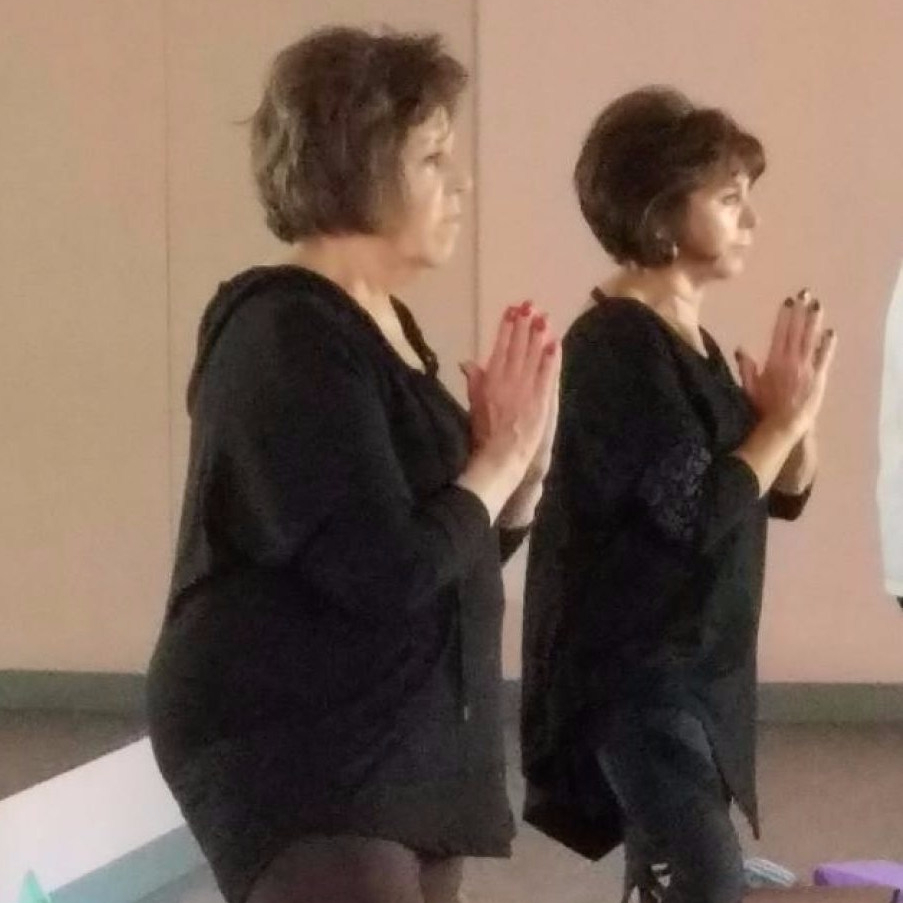
    I teach a gentle yoga class at my dance studio twice a week. All my students are women over 60, including my mother, who is almost 20 years older than I am. Each woman comes to class with her concerns, complaints, wisdom, wit, humor, and willingness to practice yoga.

    They arrive stiff, sometimes dealing with arthritis, old athletic injuries, or the effects of recent falls. Many are navigating changes in balance and flexibility after menopause. A few have post-surgical limitations, including being unable to let their heads hang, and many live with chronic pain.

    Teaching them has become the highlight of my week. Each one exemplifies what I adore about women. They are willing, coachable, and brave. They’ve chosen to face aging with the support of others—and plenty of humor.

    These women faithfully show up for class. Sometimes they gripe about how they feel physically, but they’re always willing to share how they feel emotionally, too. As their yoga teacher, it’s my job to get them out of their heads and into their bodies. But I can’t resist joining the gab session before class. In fact, I’m often guilty of starting a conversation about something on my mind, and they chime in with life experience and support for my latest tribulation. Every time we meet is an opportunity to vent, which means we start and end class 10 minutes late!

    Sometimes we begin class sitting on folding chairs, but usually we start cross-legged on the floor. Some of the women use blankets and blocks to support what the yoga community calls “modifications”—adjustments for tight hips, “bad knees,” or newly replaced joints. However we begin, we breathe deeply and turn inward together.

    I’m always humbled, and a little amused, by their trust in me. They let me lead them through breathing exercises and mantras while they sit like pretzels with their eyes closed. Once we start moving, though, I’m snapped back to reality: they shamelessly protest my instructions even as they make a valiant effort to follow them.

    It’s my responsibility to keep my students safe and make sure they aren’t stretching too far or attempting anything that could cause injury. At the same time, I want them to discover their potential and make changes that help them feel better. Often, one of them reminds me that she has already reached her potential and is as good as she’s going to get!

    So I do what any good yoga teacher would do: I keep teaching. One woman will snicker, half the class will obediently get moving, and inevitably someone will bellow, “Robin, that’s just not gonna happen today!”

    I respond with solutions involving yoga props, adjustments to body position, and reminders to breathe. Sometimes they tell me the adjustments worked. Other times, my suggestions set off uproarious laughter that sweeps through the whole class—including the teacher.

    Even though we spend much of our class laughing, I’m impressed by their progress and eagerness to enrich their lives. They’ve chosen to adapt to the changes they’ve experienced by participating in something supportive, humorous, fun, and healthy.

    Congratulations to the women who take my gentle yoga class!

    I’m grateful to you for so many reasons. You’ve made me a better yoga and dance teacher. By your example, you’ve shown me how to support one another, how to be brave, how to laugh, and, most of all, how to love each other.

    Namaste,

    Robin