Originally published in 2019, when Erin was 28.
Eight-year-old Erin Elizabeth Wilhelmi, accompanied by her sisters Katelyn and Sheila, walked into the basement of Cary Methodist Church for the first ballet-and-tap combination class I taught as a studio owner. All three were bare-legged and wearing bright-colored leotards. They had the longest, thinnest legs I had ever seen. I was enchanted by their huge almond-shaped eyes and the fact that they never stopped smiling.
Their mom, Maggie, was just as smiley, long, and lean. Breathless and excited to try a brand-new studio where her daughters could learn dance, she introduced the five of us. I began class, unaware that this was the beginning of relationships that would become so important to me and leave such lasting impressions. I never stopped feeling as enchanted by Erin as I was that first day.

At 28, Erin is a Fulbright Scholar, high school Spanish teacher, musician, dancer, choreographer, world traveler, homeowner, sister, daughter, granddaughter, niece, and friend. She earned a BA in Spanish Education, with a minor in music, from Hope College in Holland, Michigan.
As a Fulbright Scholar, Erin lived in Argentina and taught at the University of San Juan, ASIC English Institute, and Americas Public Library. While there, she traveled to Uruguay, Brazil, Peru, and Chile. Her travels have also taken her to France, the British Isles, Spain, and many destinations in the United States.
Erin is a freelance accompanist. She plays piano and choreographs for Cary-Grove High School’s Swing Choir, and accompanies rehearsals and performances for C-G’s musicals. In addition to teaching Spanish at John Hersey High School, she will direct Hersey’s show choir, Ladies First, during the 2019–20 school year.
In high school and college, Erin danced and sang in numerous performing groups and shows. She has sung at many weddings and funerals, and played lead roles in musicals that showcased her wonderful comedic timing. She was also one of the most beautiful dancers at my studio.
I sat down with Erin several months ago to learn how she had accomplished so much at such a young age—and how she managed her demanding work, travel, and social schedule while remaining happy, graceful, calm, funny, kind, and energetic.

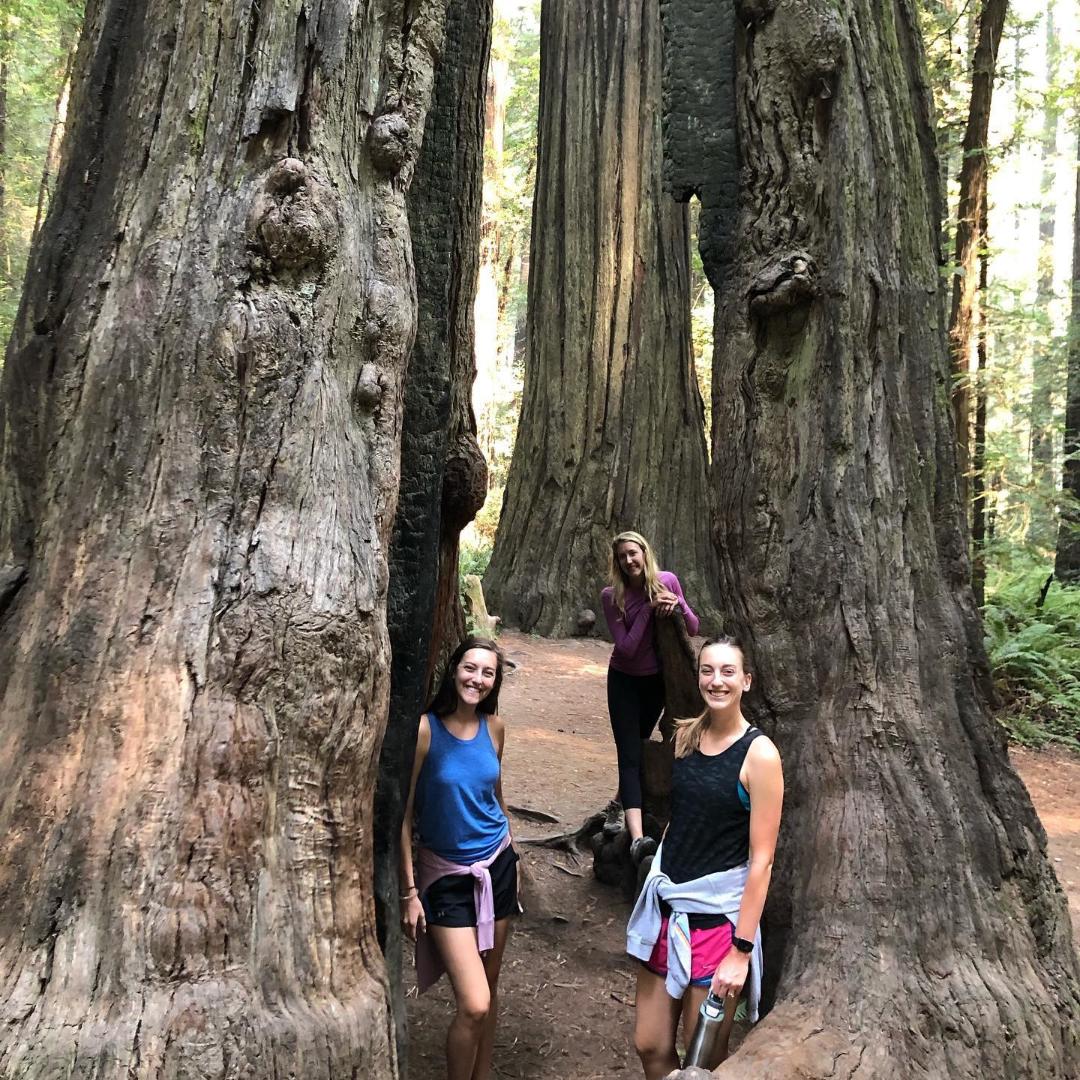
Growing up as the middle of three sisters, Erin saw herself as a nurturer and a helper—the one in the family who filled whatever role was needed. In this way, she said, she was much like Switzerland: she wants everyone to get along and will do what it takes to help make that happen. Perhaps she’s a feistier Switzerland, with the fortitude and strength to assert herself when necessary.
Erin was raised by parents who were wonderful role models and set high standards and expectations for their children. She credits them, especially her mother, with first teaching her to think of others.
“I think it started with my parents, especially my mom. She was always making me think about other people, whether it was writing thank-you notes or… Who was it who phrased it this way? Maybe my mom, but we said there are the ‘Here I am’ people or the ‘There you are’ people. My mom taught us to reflect on this, even after family events. She really ingrained in us the importance of thinking about how we wanted to treat other people. My mom is a very ‘There you are’ person, and I think going abroad was also a huge influence. It made me understand that the world has so many different people, customs, and communities. I wanted to understand them. I think that’s when I started channeling the ‘There you are.’ So I would be a listener, and I learned to listen more than I talked.”
Erin describes herself as a teacher, learner, and musician, and credits music with helping make her a team player. When I asked what she loves most about music, she responded:
“I am so grateful for music. I think both music and dance are and were an escape and a stress relief for me, a way to express myself. I still use music as a way to de-stress and challenge my mind. I feel that way with dance and choreography, too. It puts me at peace and makes me happy, and it makes people around me happy. It can be me playing piano while my sisters sing, or playing for Swing Choir or for the musical. It’s really cool. Whether that’s in the pit with these other amazing people or accompanying these kids who are having so much fun singing and dancing, it’s like, ‘Oh, I get to be a part of that!’”
Practically every time we talked about music and dance, Erin became emotional. She credits her training and experiences in both with having a huge influence on her life and giving her the work ethic and discipline she needed.
When I asked what she loves most about teaching, Erin said:
“I like seeing kids as individual people, and I think that is part of why I love teaching so much. I meet these kids and I don’t know everything that they are dealing with in their life, but for 50 minutes I can form a relationship with them and make them feel seen, and make them think about something outside of themselves. For a high school student, that is more of an uphill battle to fight. But it’s something that is important to me to do.”
Erin describes going to Hope College as a pivotal time in her life. She began to understand how much her parents had done for her, while also realizing that she could form and express opinions and make decisions without consulting them first.
As a Spanish major, she was required to spend a semester abroad. One of the most important decisions she had to make was where to study.
“I had this amazing, super-cool Argentinian professor who would take us out for small-group coffee dates to talk with us about the study-abroad program, our thoughts, ideas, and plans. I asked her a bunch of questions, and she started talking about Buenos Aires and Argentina and her life there, because she was born and raised there. What she had to say about Argentina was fascinating to me.
“I thought, ‘Well, I feel like at some point in my life I will go to Spain, because that is where everyone went. It would be cool and different, and I don’t know as much about Argentina. I want to go there.’
“But then I had a small moment of panic after applying to the program through my school. It was a language-intensive program, not a program where Hope took a bunch of students; I would be with students from all over the U.S. I got accepted and then researched Buenos Aires. I found out that it was a huge city and kind of panicked. Then I thought, ‘I don’t think I can do this; I need to go somewhere smaller…’ But then it was the best thing I ever did.”

Erin grew to love Buenos Aires. Her host family became her second family, and the friends she made there became lifelong friends. Teary-eyed, Erin said how proud she is to feel that way about Buenos Aires. She had not only conquered a completely foreign city but had come to adore it.
That was brave, considering that before going to Argentina, Erin had never traveled outside the United States except for a resort trip to Mexico. The experience sparked a sense of adventure in her. She now has a rule that she will travel somewhere at least one weekend each month.
Erin had a feeling she would return to Argentina. She did, as a Fulbright Scholar. A passing mention by a friend led to months of preparation as she applied for the program.
The Fulbright Program began in 1946 with the passage of the Fulbright Act, which used proceeds from the sale of surplus war property to fund educational exchanges. The program offers opportunities for students and young professionals to pursue graduate study, advanced research, university teaching, and primary and secondary school teaching around the world. It awards grants across many fields and operates in more than 140 countries.
Six months after graduating from Hope College, Erin returned to Argentina as a teacher and Fulbright Scholar. It was her first experience living alone, so she accepted every social opportunity offered by the friends she made at the university, took tela (silks) classes, read, and traveled. She found the experience empowering and liberating, and it taught her to enjoy and embrace alone time.
Her job was to teach English classes designed as a cultural exchange. She offered a United States point of view, told through her own lens, on culture, pop culture, history, politics, and whatever her students wanted to discuss. The work pushed her to examine current American trends and fads, and to learn more about her own country.

Argentina is primarily Catholic, and Pope Francis was born there. Erin was raised Catholic, so I asked whether she had attended church while living there. She described the church there as very literal and strict. As a result, she didn’t attend Mass while living there and avoided religious discussions. Erin describes herself as Catholic by background and finds solace in attending Mass at home, but says that isn’t how she would describe her faith. She identifies her faith as spiritual rather than sectarian.
Erin was in Argentina while Barack Obama was president, and she was surprised and gratified to hear Argentine people express their affection and admiration for him. Now more than ever, we need these cross-cultural personal connections and acts of ambassadorship.
I marvel at people of her generation and their willingness to travel, study, learn, and take a stand. They live in a world that encourages them to share themselves in countless ways, not all of them good. Yet Erin, along with many people of her generation whom I know and have had the privilege of teaching, has used the “age of information” to create a life and experiences that have made—and will continue to make—a difference in the world.
Erin is a professional woman who has traveled the world and is an incredible teacher who has experienced places and things I haven’t. Yet part of me will always first see the darling, eager, hardworking, magical little girl I taught on my very first day as a dance studio owner.
Her energy is even more positive, fresh, and kind than it was when I first met her. Elegant and gorgeous on the outside, her beauty emanates from her courageous, brilliant, generous, creative heart.
This is only part of her story; we talked for hours. Our conversation was enlightening, interesting, and fun, and I’m thrilled to see where the rest of her story goes!